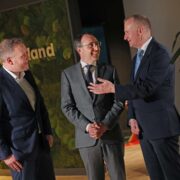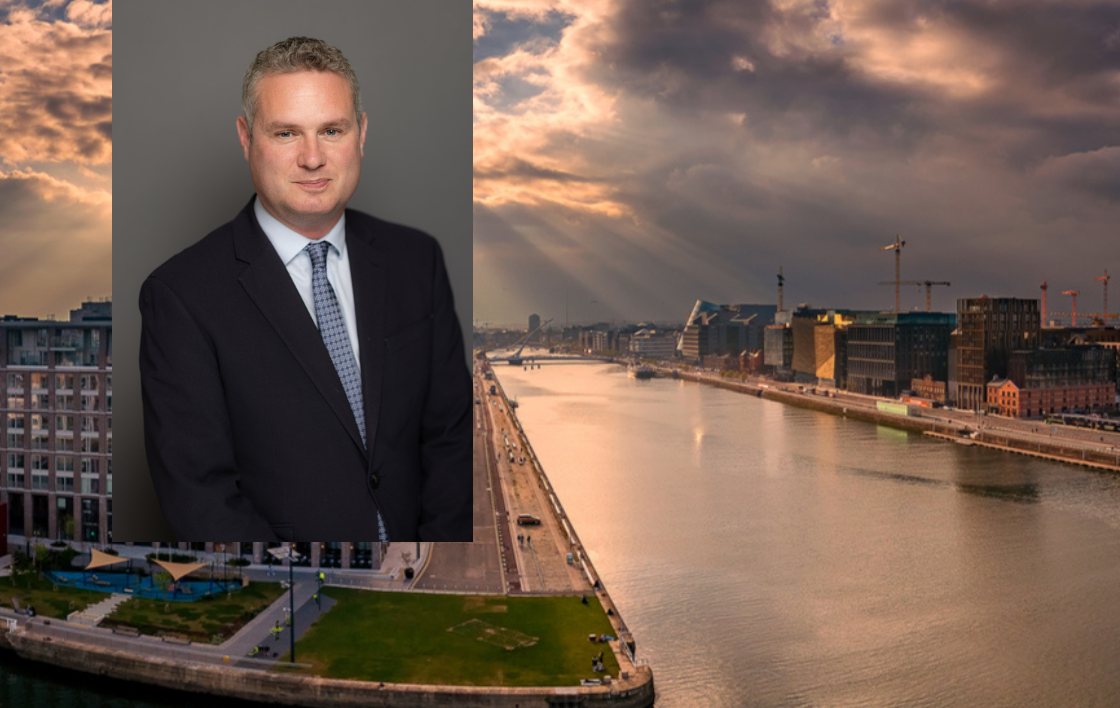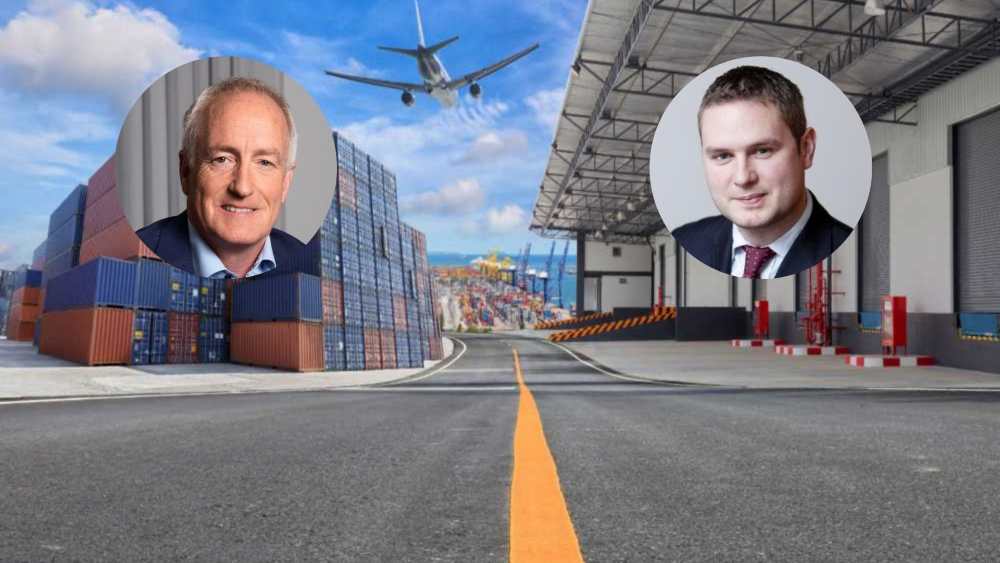

Bank of Ireland’s annual Market Outlook 2026 event in Dublin brought together leading voices to discuss trade tensions, infrastructure prioritisation and the resilience of the Irish economy.
In a packed room in Dublin, with hundreds more tuning in virtually from across Ireland and as far afield as Davos, the Bank of Ireland’s annual Market Outlook event set the tone for a year defined by uncertainty and resilience.
John Feeney, chief executive of Bank of Ireland Corporate and Commercial Banking, opened the session with a warm welcome and a candid admission: “These are uncertain times, and even while we have this seminar, I’m sure something will be changing the global backdrop.”
“There’s more unification in Europe at this juncture. Whether Europe can maintain that unification in the face of Donald Trump behaving in a very aggressive way remains to be seen”
The event, a fixture for the Bank’s broad base of corporate and commercial clients, aimed to provide clarity on the economic landscape for 2026. Feeney emphasised the Bank’s role as a “national champion” and its commitment to helping Irish businesses navigate both opportunities and risks.
A world in flux
Kicking off the economic analysis, the Bank’s group chief economist Conall Mac Coille offered a global perspective. “Consensus forecasts for Europe, the United States and the UK have actually been revised up of late,” he noted, pointing to resilient data and fiscal stimulus. “There is this real investment cycle in AI. It’s not just a stock market issue. If you look at US GDP growth in the first half of last year, it could have been all accounted for by increased investment in AI-related activity.”
Yet Mac Coille did not shy away from the risks. “The US debt to GDP ratio is now 125%. Under Trump, deficits of seven, eight percent of GDP are planned to be run for the next couple of years,” he warned. “If markets start to really question the credibility of the Federal Reserve, there’s certainly the risk of an accident at some point.”
Watch video:
He also highlighted the threat of escalating trade tensions. “The main issue for us is that pharmaceuticals remain exempt. But depending on what’s actually affected by tariffs, some of you may need to think about your supply chains.”
Tariffs, trade and the Irish dilemma
The panel discussion quickly turned to the looming threat of tariffs between the US and Europe. Dan O’Brien, chief economist at the Institute of International and European Affairs, was blunt: “The range of possibilities is very wide. If these tariffs are imposed on the first of February, I feel very strongly the Europeans won’t back down this time, and there will be retaliation.”
Frances Ruane, former chair of the National Competitiveness and Productivity Council, reflected on Europe’s response. “There’s more unification in Europe at this juncture,” she said. “Whether Europe can maintain that unification in the face of Donald Trump behaving in a very aggressive way remains to be seen.”
The conversation also touched on Ireland’s delicate balancing act between the US and the EU. “We’re trying to play a very balancing game, which is very tricky,” Ruane observed. “A lot of it depends on where Europe goes before we get to the summer.”
Domestic headwinds: Infrastructure and labour
Turning to the Irish economy, Mac Coille described a shift to more sustainable growth. “The days of three percent jobs growth are behind us,” he said. “We’ve seen a bit of a slowdown in job creation. The sectors doing well are industry, manufacturing and the public sectors, but consumer-facing sectors and ICT are now beginning to detract from growth.”
Infrastructure bottlenecks emerged as a recurring theme. “The real stock of public infrastructure is about 25% below peer countries,” Mac Coille explained. “Build cost inflation has hurt the delivery of infrastructure. There’s no lack of money, but we need to remove obstacles in regulation and coordination.”
Ruane echoed these concerns, noting, “We have a massive capital deficit. Even when we made provision for more capital, there was consistent underspending of that budget. The issue for me is on the capital side. We need to absolutely make sure we’re filling in that deficit.”
Migration and the labour market
Ireland’s extraordinary net migration was also discussed. “Over half of our labour force growth is expected to be net migration,” Mac Coille said. Ruane added, “The question is the absorptive capacity and the speed of being able to manage that. We seem to have managed so far, but are we asking the hard questions? If it were to happen now, it could happen in not the right way.”
The panel acknowledged the transformative potential of AI, but also Ireland’s lag in digital adoption. “AI has the capacity to shake things up,” O’Brien remarked. Ruane stressed, “It’s really important that firms, homes and universities make sure their graduates are actually exploring AI. As a government sector, we’ve been behind the curve on digital adoption.”
Financial markets: Cautious optimism
Daragh Fitzgerald, head of Markets Execution at Bank of Ireland, addressed the risks in financial markets. “A sharp equity market correction is certainly right up there,” Fitzgerald said. “Valuations, especially in the tech sector, are very extended. But the backdrop is supportive of equity gains in general. The debt mountain is going to be a challenge, not just for the US, but for Japan, Europe and the UK.”
As the session drew to a close, the mood was cautiously optimistic. “If we look at the Irish economy, the last five years have been about extraordinary labour force growth and a lack of domestic investment,” Ruane summarised. “The next five years should be more about domestic investment and infrastructure rollout.”
O’Brien reflected on the resilience shown in recent years. “If we were sitting here six years ago and someone had said, ‘These are the things that are going to happen,’ I would have just given up. But resilience has been extraordinary. Across Europe, never have there been more people employed.”
The panel agreed that Ireland’s focus should be on “controlling the controllables.” Ruane concluded, “We’ve now articulated some of the things that badly need control. If we can focus on making the things we control work, as opposed to agreeing on the difficulties of the outside world, we’ll be in a better place.”
Further reading:
Bank of Ireland Global Watch January 2026
-
Bank of Ireland is welcoming new customers every day – funding investments, working capital and expansions across multiple sectors. To learn more, click here
-
For support in challenging times, click here
-
Listen to the ThinkBusiness Podcast for business insights and inspiration. All episodes are here. You can also listen to the Podcast on:
-
Spotify
-
SoundCloud
-
Apple