Pressure mounts on IT leaders. Survey finds almost every large organisation has experienced AI project failure, with many unable to explain automated decisions to customers or regulators.
Irish enterprises have spent an estimated €720m on artificial intelligence projects that delivered no usable outcome, according to new research from Saros Consulting.
The findings highlight the scale of investment flowing into AI across the country and the growing strain on IT departments as businesses attempt to keep pace with rapidly evolving technology.
“We are seeing a pattern of businesses investing significant resources in AI without fully understanding why, and in the hope of success that often doesn’t come to fruition”
The survey of 200 IT decision-makers in large Irish organisations found that the average company has written off about €770,000 on AI initiatives that ultimately produced nothing. Almost all respondents, 99 per cent, reported experiencing at least one failed AI project.
Concerns about accountability
The results suggest that many organisations are pursuing AI adoption at speed, often without clear strategic planning or the governance structures required to manage the risks. Just over half of organisations surveyed said they have an AI strategy in place, despite 62 per cent describing AI as important to their business.
More than half of IT leaders said their organisation had deployed AI systems that generated decisions they could not explain to customers, raising concerns about transparency and accountability. A similar proportion said they had been unable to provide regulators with clear explanations of how AI-led decisions were made. Over the past year, 53 per cent discovered instances of AI producing biased or discriminatory outcomes.
Ray Armstrong, co-founder and co-chief executive of Saros Consulting, said the findings show that enthusiasm for AI is often outpacing planning.
“Our research shows that AI ambitions are coming at an unnecessary cost to enterprises in Ireland. We are seeing a pattern of businesses investing significant resources in AI without fully understanding why, and in the hope of success that often doesn’t come to fruition,” he said. “While the promises of AI are undoubtedly exciting, these will remain out of reach for organisations that do not define a strategy first.”
The survey also reveals signs of tension between IT leaders and senior executives. Fifteen per cent of respondents said their leadership team had unrealistic expectations of AI’s capabilities. Fewer than six in ten said senior leaders have realistic expectations of what the organisation can practically implement. Almost two-thirds said IT leaders feel obliged to hide their lack of preparedness because of pressure from the top.
Justin van der Spuy, co-founder and co-chief executive of Saros Consulting, said the pace of development in AI can tempt organisations into a cycle of continuous spending without proper evaluation.
“AI is ever-changing, thus demanding a steady flow of investment. While some enterprises can afford continuous expenditure on AI projects, they risk losing time and other benefits if those projects prove to be of no use,” he said. “Businesses in Ireland must reassess how they decide which AI projects to invest in and ensure proper safeguards are in place. Failure to do so will result in wasted spend with no tangible return, or even worse, a negative one.”
Budget constraints, regulatory concerns and weak governance were identified as the main barriers to successful AI implementation. The research suggests that as investment accelerates, the absence of guardrails could expose businesses to financial, operational and compliance risks.
The findings were published ahead of anticipated EU-level regulations on AI, which are expected to increase the scrutiny applied to automated decision-making systems. For many organisations already struggling to explain the outputs of their algorithms, the regulatory burden is likely to grow heavier.
Saros Consulting said the data underscores the need for clearer strategies, more robust controls and closer alignment between executive ambitions and practical capabilities.
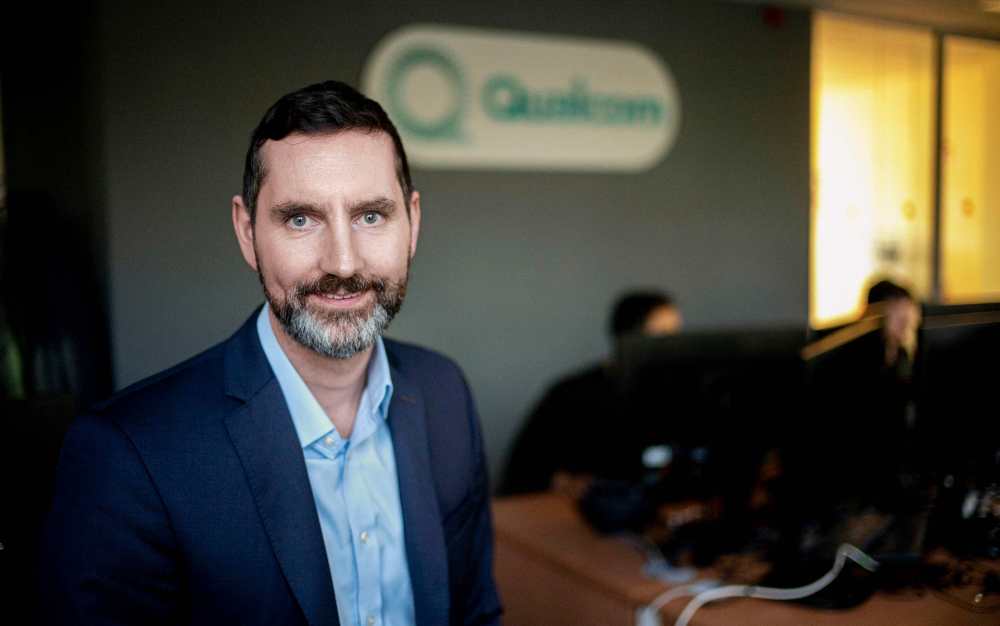
Top image: Ray Armstrong and Justin van der Spuy, co-founders and co-CEOs of Saros Consulting
-
Bank of Ireland is welcoming new customers every day – funding investments, working capital and expansions across multiple sectors. To learn more, click here
-
For support in challenging times, click here
-
Listen to the ThinkBusiness Podcast for business insights and inspiration. Latest episodes are here. You can also listen to the Podcast on:
-
Spotify
-
SoundCloud
-
Apple