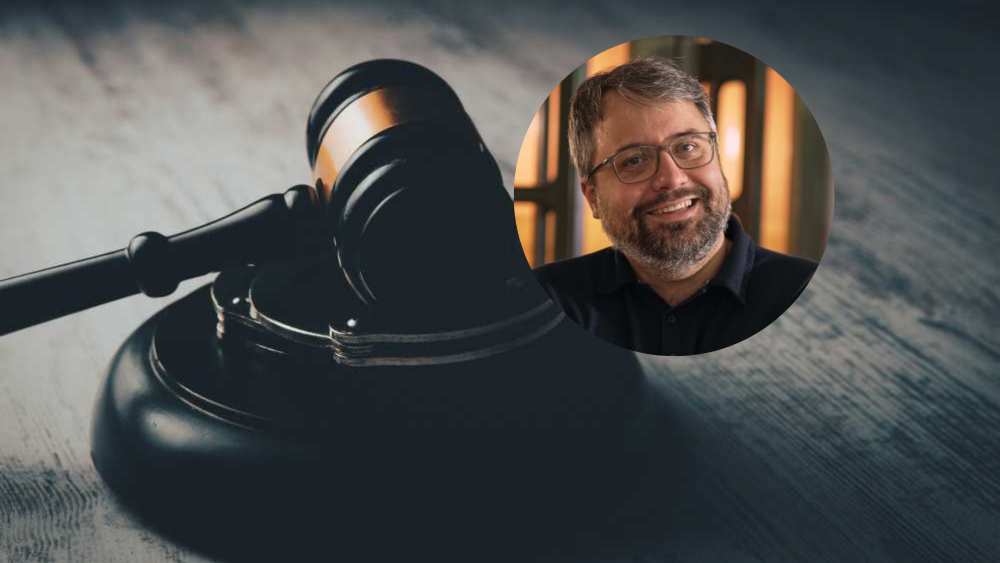
Legal tech expert warns businesses may be unprepared for cross-border requests from European law enforcement authorities.
Hundreds of Irish businesses could now find themselves legally obliged to respond to requests for electronic evidence from police and judicial authorities across Europe as the EU’s new e-Evidence Regulation comes into force
That’s according to Maureen King, CEO and founder of Irish legal technology company iTrust 6A.
“Timely access to electronic evidence is often critical in life-threatening emergencies and can make the difference between justice being served and justice being denied”
The regulation, which took effect on 18 August, introduces a harmonised legal framework enabling law enforcement and judicial authorities across EU member states to obtain electronic evidence directly from service providers located in other countries within the bloc.
King said the impact could be particularly significant in Ireland, given the country’s position as a European hub for technology companies, cloud infrastructure providers and digital services.
“The large multinational tech companies have been preparing for this for some time, but many smaller providers may not even realise these obligations now apply to them,” King said.
Electronic evidence
The regulation is designed to streamline cross-border criminal investigations by allowing authorities to access electronic evidence more quickly than through traditional international cooperation channels.
According to the European Commission, around 85% of criminal investigations now involve electronic evidence, while 65% of those investigations require access to information held in another EU member state.
King, who has more than two decades of experience in the telecommunications sector and has provided expert evidence in hundreds of criminal trials, said businesses need to understand the operational demands that come with the new regime.
“This isn’t just a compliance issue. Businesses need processes, governance and technology to respond securely to legally binding requests within as little as eight hours in emergency cases,” she said.
She said access to digital evidence can play a vital role in urgent criminal investigations.
“Timely access to electronic evidence is often critical in life-threatening emergencies and can make the difference between justice being served and justice being denied,” King said.
“Ireland has become a cornerstone of Europe’s digital economy. It is now becoming a cornerstone of Europe’s justice infrastructure as well.”
The scale of the challenge for organisations operating in Ireland was highlighted recently by Minister for Justice, Home Affairs and Migration Jim O’Callaghan, who said more than 600 service providers could designate an addressee in Ireland under the new framework. He also indicated that potentially hundreds of thousands of production orders could be expected each year.
Growing compliance challenge
Businesses that fall within the scope of the regulation will be required to designate an addressee responsible for receiving and responding to legal requests. They will also need to ensure they have the people, procedures and systems in place to meet strict response timelines.
Failure to comply with the regulation could result in enforcement action, including penalties of up to 2% of global annual turnover.
King urged organisations to assess their obligations immediately.
“All businesses, especially those providing online services, should assess their obligations now, not when a legal order lands on their desk,” she said.
The introduction of the e-Evidence Regulation is expected to place Ireland at the centre of a growing volume of cross-border legal requests due to the concentration of digital service providers operating from the country.
iTrust 6A, which was founded to help organisations manage lawful data disclosure obligations, believes many businesses outside the largest technology firms may still be unaware that the new legal framework applies to them.
The company’s platform is built around what it calls the Six A’s decision-making framework: Authentication, Assurance, Appropriateness, Assessment, Authorisation and Accountability. The framework is designed to help organisations make defensible decisions when handling requests for data from law enforcement agencies.
👉 No tech background needed to bring your business into the AI age! Secure your scholarship to complete the certification at no cost. Apply now and get started!
-
Bank of Ireland is welcoming new customers every day – funding investments, working capital and expansions across multiple sectors. To learn more, click here
-
For support in challenging times, click here
-
Listen to the ThinkBusiness Podcast for business insights and inspiration. All episodes are here. You can also listen to the Podcast on:
-
Spotify
-
SoundCloud
-
Apple